Top Performance Management Trends for 2025: What Small Businesses Need to Know
Discover the top performance management trends for 2025 and learn how small businesses can stay ahead with continuous feedback, AI-powered tools,...
Discover proven workplace evaluation methods that drive retention and engagement through continuous feedback. Compare top approaches for mid-sized organizations in 2026.
Traditional annual reviews no longer meet the demands of today's workforce. Organizations need evaluation methods that support continuous feedback, align with hybrid work models, and drive meaningful employee development. This guide explores proven workplace evaluation strategies that enhance retention, engagement, and performance outcomes for mid-sized organizations in 2026.

| Point | Details |
|---|---|
| Continuous feedback drives retention | Organizations with strong feedback cultures see 25% lower turnover rates compared to those using only annual reviews. |
| Hybrid work requires adapted metrics | Remote and hybrid teams need real-time digital tools and outcome-based measurement approaches. |
| Bias detection protects organizations | Data-driven bias detection prevents legal risks while promoting fairness and equity in evaluations. |
| Multiple methods serve different goals | Quarterly reviews, 360-degree feedback, and goal-setting conversations each address specific organizational needs. |
Choosing the right performance evaluation method starts with understanding your organization's specific needs and goals. The evaluation system you select should align with your retention targets, engagement objectives, and operational realities.
Consider these essential criteria when evaluating your options:
The shift toward continuous feedback reflects changing employee expectations. Organizations with strong feedback cultures see 25% lower turnover rates, making this a critical consideration for retention-focused HR strategies.
Your selection criteria should also account for implementation complexity. Some methods require extensive manager training, while others integrate seamlessly into existing workflows. The right choice balances effectiveness with practical adoption challenges.
Pro Tip: Start by surveying your managers and employees about current evaluation pain points. This data reveals which criteria matter most to your specific organization and helps prioritize features in your new system.
The best evaluation method supports employee performance management and feedback while fitting naturally into your team's daily work patterns. Avoid methods that create administrative burden without delivering proportional value.
Several evaluation approaches have emerged as leaders in 2026, each offering distinct advantages for organizations prioritizing continuous feedback and development.
Continuous performance feedback systems represent the most significant shift from traditional models. These platforms enable ongoing conversations between managers and employees, replacing the once-yearly review cycle with regular touchpoints. The impact is substantial: 72% of employees want real-time feedback on their work, and continuous systems deliver exactly that.
Quarterly performance reviews offer a middle ground for organizations transitioning from annual cycles. These structured check-ins provide regular evaluation moments while maintaining some formality and documentation rigor. They work particularly well for project-based teams where goals and priorities shift seasonally.
360-degree feedback integrates perspectives from peers, direct reports, and managers to create a comprehensive performance picture. This method reduces individual bias and provides employees with well-rounded insights about their impact across the organization. Implementation requires careful design to ensure psychological safety and constructive feedback delivery.

Real-time feedback tools support remote and hybrid teams by capturing performance insights as work happens. These digital platforms remove geographical barriers and create documentation trails that inform formal reviews. They're essential for distributed teams where managers lack daily visibility into employee contributions.
Goal-setting conversations transform evaluations from backward-looking assessments into forward-focused development discussions. When managers and employees collaborate on objectives and regularly review progress, alignment improves and engagement increases naturally.
Pro Tip: Combine multiple methods for maximum impact. Use continuous feedback for day-to-day coaching, quarterly reviews for formal documentation, and 360-degree feedback annually for comprehensive development insights.
The most effective organizations revolutionize their performance reviews by selecting methods that match their culture and operational model. Consider how continuous feedback boosts reviews when designing your evaluation strategy.
Understanding how different evaluation methods perform across key metrics helps you make informed decisions. This comparison highlights the strengths and trade-offs of leading approaches.
| Method | Retention Impact | Implementation Ease | Bias Detection | Manager Satisfaction |
|---|---|---|---|---|
| Traditional annual reviews | Low | High | Low | Medium |
| Continuous feedback systems | High | Medium | High | High |
| Quarterly reviews | Medium | High | Medium | High |
| 360-degree feedback | Medium | Low | High | Medium |
| Real-time feedback tools | High | High | Medium | High |
The data strongly favors continuous approaches. Companies that implement continuous performance feedback practices see 44% higher employee retention compared to those using only annual reviews. This retention advantage translates directly to reduced hiring costs and preserved institutional knowledge.
Implementation ease varies significantly. Traditional annual reviews require minimal system changes but deliver poor outcomes. Continuous feedback systems need more upfront investment in training and technology but generate superior results once established. Real-time feedback tools offer the best balance, combining strong outcomes with relatively simple adoption.
Bias detection capabilities differ substantially across methods. Continuous feedback systems and 360-degree feedback excel here because they capture multiple data points over time, making patterns visible. Traditional annual reviews concentrate bias risk into a single moment, making disparities harder to identify and correct.
Manager satisfaction correlates with system simplicity and perceived fairness. Continuous feedback and real-time tools score highest because they distribute evaluation work throughout the year rather than creating intense seasonal burdens. Quarterly reviews also perform well by providing structure without overwhelming frequency.
Employee engagement outcomes favor methods that provide regular input and development focus. Systems that use performance management to retain talent emphasize ongoing conversations over annual judgments. Organizations must also consider hybrid work performance metrics when comparing options for distributed teams.
Selecting the optimal evaluation method requires matching system capabilities to your organization's specific context and maturity level. Follow these steps to make the right choice:
Your organization's feedback maturity significantly influences which method will succeed. Companies new to continuous feedback may need to start with quarterly reviews before advancing to real-time systems. Organizations with strong existing feedback cultures can implement more sophisticated approaches immediately.
Manager training represents a critical success factor regardless of method chosen. Even the best evaluation system fails without managers who can deliver constructive feedback, recognize bias, and facilitate meaningful development conversations. Budget adequate time and resources for building these capabilities.
Hybrid and remote workforce considerations have become non-negotiable in 2026. Your chosen method must work effectively across physical locations and time zones. Digital tools that capture feedback asynchronously and provide visibility into distributed team performance are essential for most organizations.
Regular review and adaptation keep your evaluation approach current. 65% of organizations are revising their performance review process, recognizing that workforce expectations and business needs evolve continuously. Plan annual assessments of your evaluation system's effectiveness and make adjustments based on employee feedback and outcome data.
Pro Tip: Don't wait for perfect conditions to upgrade your evaluation method. Start with the best option available now and iterate based on results. Organizations that delay improvement while pursuing ideal solutions miss months or years of retention and engagement benefits.
The most successful implementations focus on creating performance conversations in SMBs that feel natural and valuable to both managers and employees. Choose methods that reduce administrative burden while increasing meaningful interaction.
Modern performance management requires platforms built specifically for continuous feedback and employee development. EvalFlow consolidates the tools mid-sized organizations need to implement leading evaluation methods effectively.
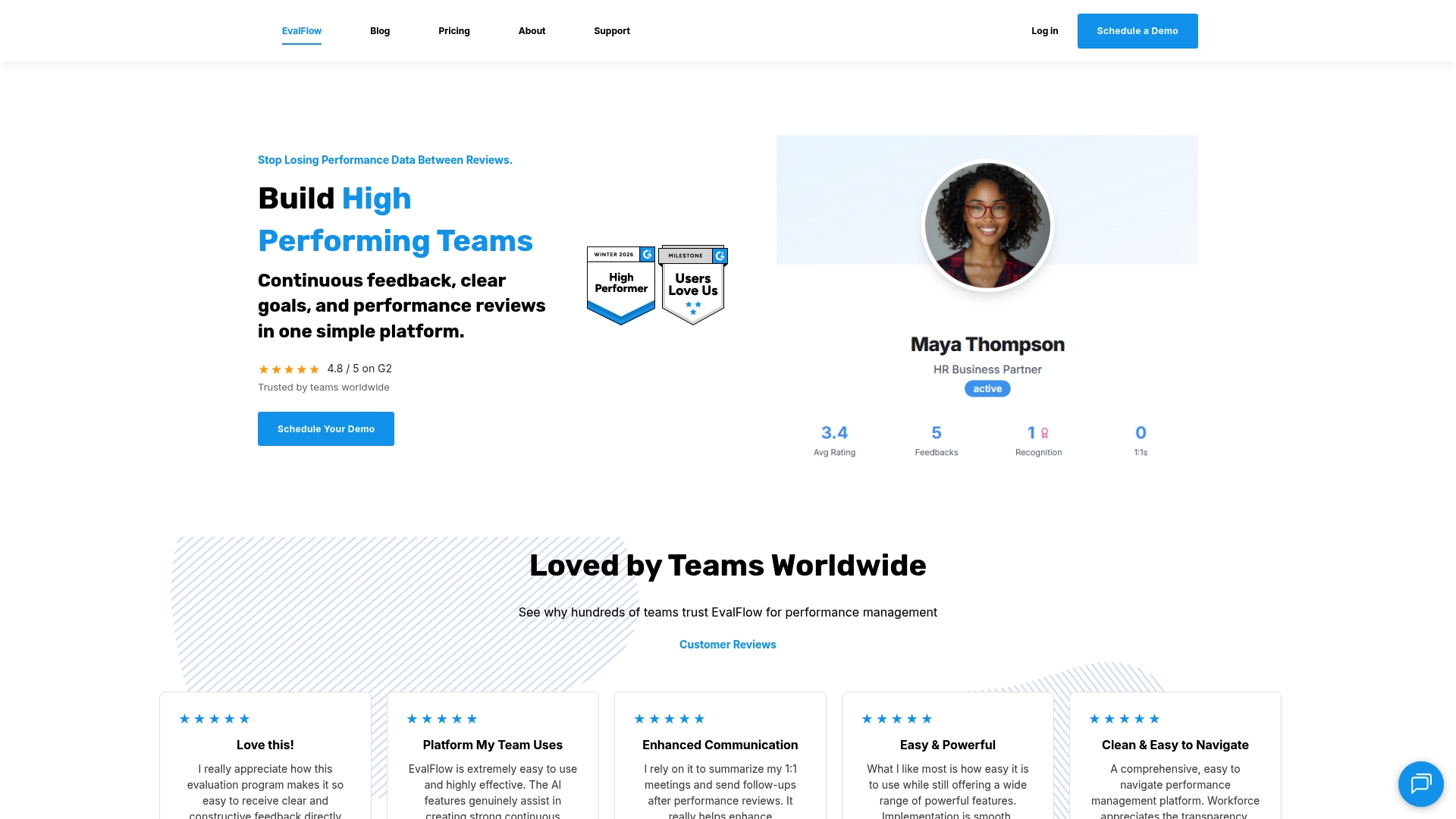
Our AI-powered platform supports continuous feedback cycles, goal setting, performance reviews, and bias detection within a single system. You'll eliminate scattered spreadsheets and notes while gaining real-time visibility into employee progress and development needs. EvalFlow integrates seamlessly with Microsoft Teams and Slack, fitting naturally into your team's existing workflows.
The platform's bias detection capabilities help you identify rating disparities before they become legal or cultural risks. Manager accountability features ensure consistent evaluation practices across your organization. Flexible pricing scales with your team as you grow.
Discover how EvalFlow performance evaluation tools can streamline your review process, boost retention, and support the continuous feedback culture your employees expect in 2026.
Continuous performance feedback provides timely, ongoing input throughout the year rather than concentrating evaluation into annual reviews. This approach aligns employee efforts with organizational goals in real time and boosts motivation through regular recognition and course correction. 72% of employees want real-time feedback on their work, making continuous systems essential for engagement and retention.
Use data analytics to identify rating disparities across demographic groups, revealing patterns that individual managers may miss. Train managers on unconscious bias and apply standardized evaluation criteria to ensure consistency. Poor bias detection in performance feedback systems costs companies millions in litigation, talent loss, and damaged culture, making proactive detection critical for organizational health.
Incorporate real-time digital feedback tools that bridge geographical distance and capture performance insights as work happens. Focus on measurable outcomes and goal-setting conversations rather than activity monitoring, which damages trust. 50% of organizations now operate hybrid or fully remote models, requiring evaluation systems designed specifically for distributed work.
Most effective organizations conduct formal reviews quarterly while maintaining continuous informal feedback between those touchpoints. This frequency balances documentation needs with agility and development focus. Annual reviews alone no longer meet employee expectations or business needs for responsive performance management.
Manager training determines whether any evaluation method succeeds or fails in practice. Even sophisticated systems produce poor outcomes when managers lack skills in delivering constructive feedback, facilitating development conversations, and recognizing their own biases. Invest at least as much in manager capability building as in evaluation technology and processes.
Discover the top performance management trends for 2025 and learn how small businesses can stay ahead with continuous feedback, AI-powered tools,...
Compare affordable AI-powered performance review tools for mid-sized businesses. See how EvalFlow and 7 other platforms stack up on features, AI, and...
AI transforms SMB performance reviews in 2025 with real-time feedback, objective metrics, and personalized development, enhancing employee engagement...