Stop Waiting 6 Months to Tell Someone They're Doing a Great Job
79% of employees who quit cite lack of appreciation. EvalFlow makes recognition instant, public, and connected to performance reviews — from...
User-friendly performance management systems increase engagement, retention, and productivity through intuitive design and automation. Learn how to implement and benefit from these tools in your organization.
Research shows that user-friendly performance management systems can boost employee engagement by up to 30%, yet many small and medium-sized organizations still struggle with clunky, outdated tools. The right system transforms how your team communicates, sets goals, and grows professionally. This guide explores why ease of use matters, how it impacts retention and productivity, and practical steps to implement systems that work for your organization.
| Point | Details |
|---|---|
| Engagement boost | User-friendly systems improve engagement by 20-30% through intuitive design and continuous feedback |
| Retention gains | Organizations experience 15-25% reduction in employee turnover with accessible performance tools |
| Time savings | Automation reduces administrative burden by up to 40%, freeing HR teams for strategic work |
| Productivity increase | Continuous feedback mechanisms boost productivity 10-20% through regular check-ins |
| Goal alignment | Easy-to-use goal tracking drives 10-20% higher achievement of organizational objectives |
A user-friendly performance management system combines intuitive design with powerful features that help managers and employees track progress without technical headaches. These platforms prioritize clear navigation, automated workflows, and real-time feedback over complex interfaces that require extensive training.
For small and medium-sized businesses, accessibility matters even more. Your HR team likely wears multiple hats, and employees need tools they can adopt quickly. User-friendly systems significantly improve engagement and retention in SMBs by removing friction from everyday performance conversations.
Key features that define user-friendly systems include:
Traditional performance management often relies on annual reviews buried in spreadsheets and disconnected feedback channels. Employees lose track of goals, managers forget conversations, and HR spends hours compiling data manually. Modern performance management in the digital age solves these problems through centralized, accessible platforms.
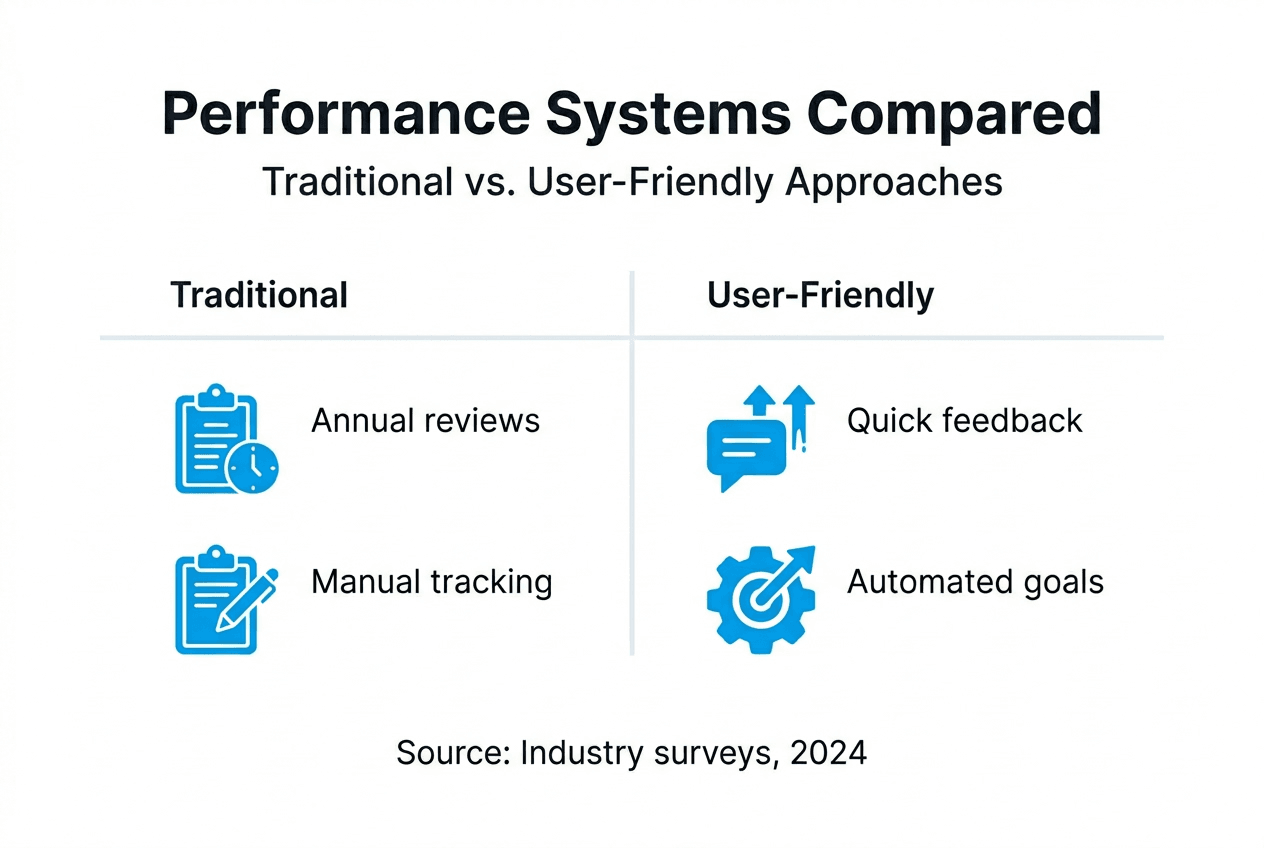
The difference shows up in daily operations. When managers can give feedback in seconds rather than scheduling formal meetings, conversations happen more naturally. When employees see their goals and progress clearly displayed, they stay motivated and aligned with company objectives. SHRM research confirms that removing usability barriers directly correlates with higher engagement scores and better business outcomes.
The connection between system usability and workforce stability runs deeper than convenience. When performance tools feel easy and valuable, employees engage more frequently with development conversations. User-friendly systems improve engagement scores by 20-30% compared to traditional approaches.

This engagement translates directly into retention. Companies report 15-25% reduction in turnover after implementing accessible performance management systems. Employees who receive regular, meaningful feedback feel more valued and connected to organizational goals.
| Metric | Traditional Systems | User-Friendly Systems | Improvement |
|---|---|---|---|
| Engagement Score | 55-65% | 75-85% | +20-30% |
| Annual Turnover | 20-25% | 12-18% | -15-25% |
| Feedback Frequency | Quarterly | Weekly/Bi-weekly | 4-8x increase |
| Manager Adoption | 40-50% | 85-95% | +45-55% |
Continuous feedback loops create momentum that annual reviews cannot match. When managers can recognize achievements immediately or address concerns while they're still fresh, employees respond positively. This real-time approach works especially well for strategies to boost employee engagement in small teams where relationships drive culture.
For SMBs with lean HR departments, user-friendly systems level the playing field. You gain enterprise-grade capabilities without needing dedicated IT support or extensive training programs. Deloitte research shows that organizations with simpler performance tools see higher adoption rates across all employee levels.
Pro Tip: Launch your new system with a pilot group of enthusiastic managers who can become internal champions. Their positive experiences will encourage broader adoption faster than any training manual.
Automation transforms performance management from a time-consuming obligation into a strategic advantage. Automation reduces admin time by up to 40% by handling routine tasks like scheduling reviews, sending reminder notifications, and compiling progress reports. Your HR team shifts from data entry to meaningful coaching conversations.
Consider the difference between manual and automated approaches:
| Task | Manual Process | Automated Process | Time Saved |
|---|---|---|---|
| Review Scheduling | 2-3 hours per cycle | 15 minutes setup | 85-90% |
| Feedback Collection | 4-5 hours | Real-time capture | 95%+ |
| Progress Reports | 3-4 hours | Instant generation | 90%+ |
| Goal Updates | 2 hours monthly | Continuous tracking | 75%+ |
Goal alignment becomes simpler when everyone views objectives in one place. Goal alignment leads to 10-20% higher achievement of objectives because employees understand how their work connects to bigger priorities. User-friendly systems display this connection visually through cascading goals and progress indicators.
Effective goal tracking features include:
The best systems make goal setting collaborative rather than top-down. Managers and employees can discuss objectives directly in the platform, propose adjustments, and track progress together. This transparency builds trust and accountability without micromanagement.
These approaches align perfectly with proven performance management tips for SMBs that emphasize clarity and regular communication. When goals live in an accessible system rather than buried in email threads, everyone stays aligned naturally.
Pro Tip: Connect individual goals directly to company OKRs within your system. Employees who see how their work impacts organizational success show 15-20% higher motivation and achievement rates.
Implementing new performance management technology comes with predictable obstacles. Employees resist unfamiliar tools, managers worry about added workload, and leadership questions ROI before seeing results. Employee acceptance of change management is crucial for performance improvements post-HRIS implementation in SMEs.
Common adoption challenges include:
Successful change management starts with clear communication about why the new system matters. Frame it as solving pain points employees already experience, not adding bureaucracy. Show how it saves time, provides better feedback, and supports career growth.
Leadership plays a critical role in adoption success. When executives actively use the system, share feedback publicly, and celebrate wins tracked through the platform, employees follow naturally. Model the behavior you want to see rather than mandating participation through policy alone.
Practical strategies accelerate adoption:
The performance management software implementation guide offers detailed steps for smooth transitions. Most SMBs see meaningful traction within 60-90 days when they prioritize user experience and change management equally.
Timing matters too. Launch during a natural transition point like a new quarter or fiscal year rather than mid-cycle when everyone feels overwhelmed. This study on HRIS change management in SMEs confirms that thoughtful rollout planning significantly impacts long-term success rates.
Implementing the strategies covered in this guide becomes straightforward with the right platform. EvalFlow offers an intuitive, AI-powered performance management solution designed specifically for small and medium-sized organizations that need enterprise capabilities without enterprise complexity.
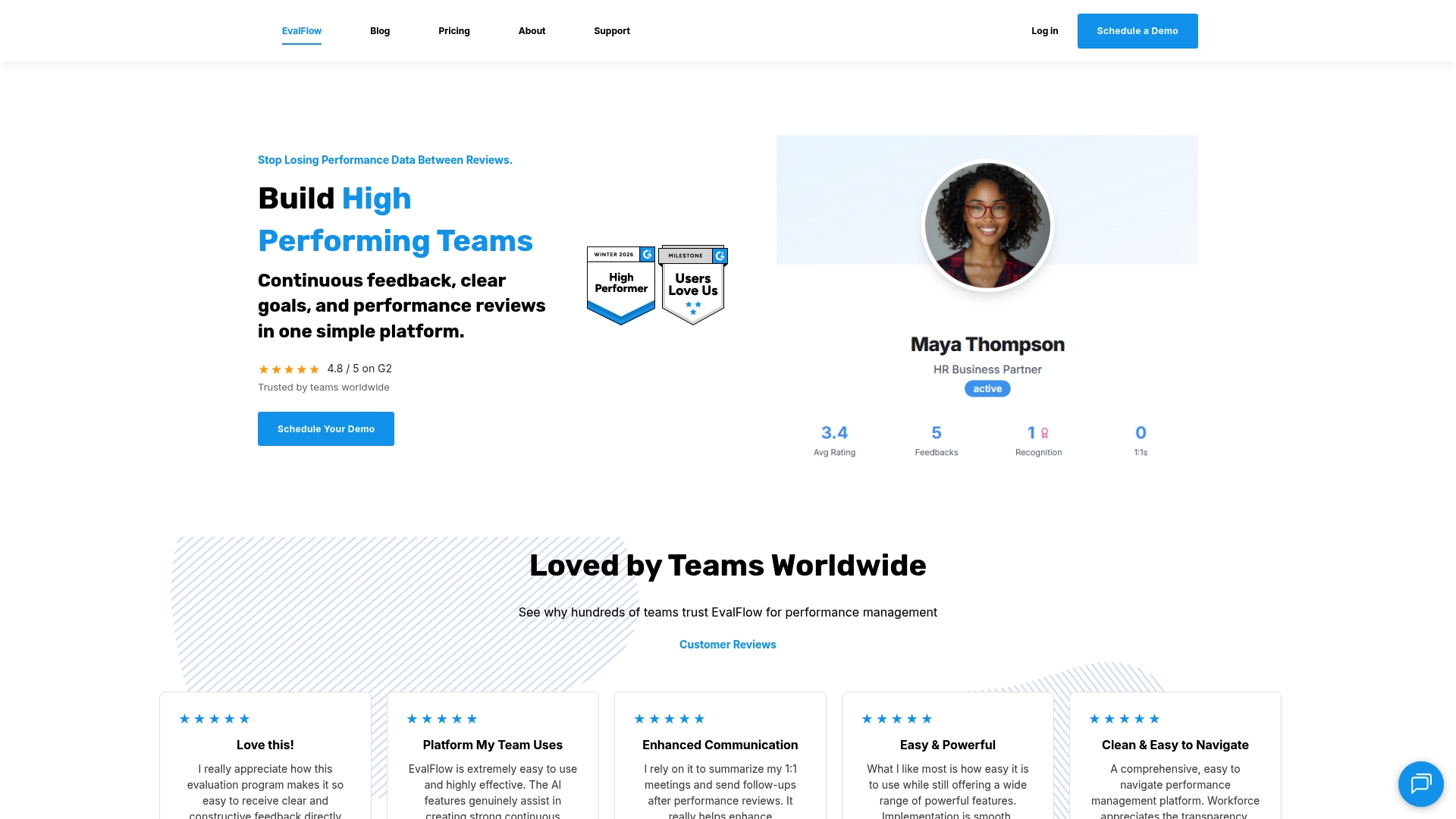
Our platform combines continuous feedback, goal tracking, performance reviews, recognition, and pulse surveys in one centralized system. You'll reduce administrative burden through automation while giving employees the real-time visibility they need to grow. Integration with Microsoft Teams and Slack means your team can give feedback and track progress without leaving their daily workflow. The EvalFlow performance management platform provides transparent pricing and flexible plans that scale with your team, making it easy to get started today with a free demo.
A user-friendly system features an intuitive interface requiring minimal training, clear navigation that helps users find what they need quickly, and automation that handles routine tasks like review reminders. The best platforms work seamlessly with tools your team already uses daily, reducing friction and increasing adoption naturally.
Most small and medium-sized businesses report measurable improvements in employee engagement within 60-90 days of implementation. Retention gains typically become visible within the first year as employees respond positively to increased feedback and clearer development paths. Quick wins in time savings and goal visibility appear almost immediately after launch.
Resistance to change tops the list, especially when employees feel overwhelmed by learning new technology. Lack of adequate training, unclear communication about benefits, and insufficient leadership modeling also slow adoption rates. Strong change management strategies that prioritize user experience, provide ongoing support, and celebrate early wins help overcome these hurdles effectively.
Yes, research consistently shows that continuous feedback increases performance by up to 20% compared to annual review approaches. Regular check-ins allow managers to address issues promptly, recognize achievements immediately, and keep employees aligned with evolving priorities. This real-time approach boosts both productivity and morale significantly.
79% of employees who quit cite lack of appreciation. EvalFlow makes recognition instant, public, and connected to performance reviews — from...
Discover 7 research-backed HR strategies to build a thriving feedback culture in 2026. Learn from Adobe's proven model and boost employee engagement...
100+ essential HR statistics for 2026 from Gallup, SHRM, Deloitte, and BLS. Covers engagement, turnover, AI in HR, DEI, remote work, and performance...